
What Is a Talent Intelligence Platform and Do Recruiters Actually Need One?
The term "talent intelligence platform" gets applied to everything from a basic resume database to a full-stack AI recruiting suite. That vagueness makes it genuinely difficult to know whether you need one, whether you already have one, or whether you're paying for capabilities you'll never touch.
- What "Talent Intelligence" Actually Means
- The Core Components
- Who Actually Needs One?
- Talent Intelligence Platform vs. AI Sourcing Tool: Is There a Difference?
- What to Look for When Evaluating One
- Where Kalent Fits
- The Honest Assessment
- Frequently Asked Questions
What "Talent Intelligence" Actually Means
At its core, talent intelligence is the practice of using data to make better hiring decisions faster. That means finding candidates you wouldn't have found manually, understanding market supply and demand for specific skills, and reaching the right people through the right channels at the right time.
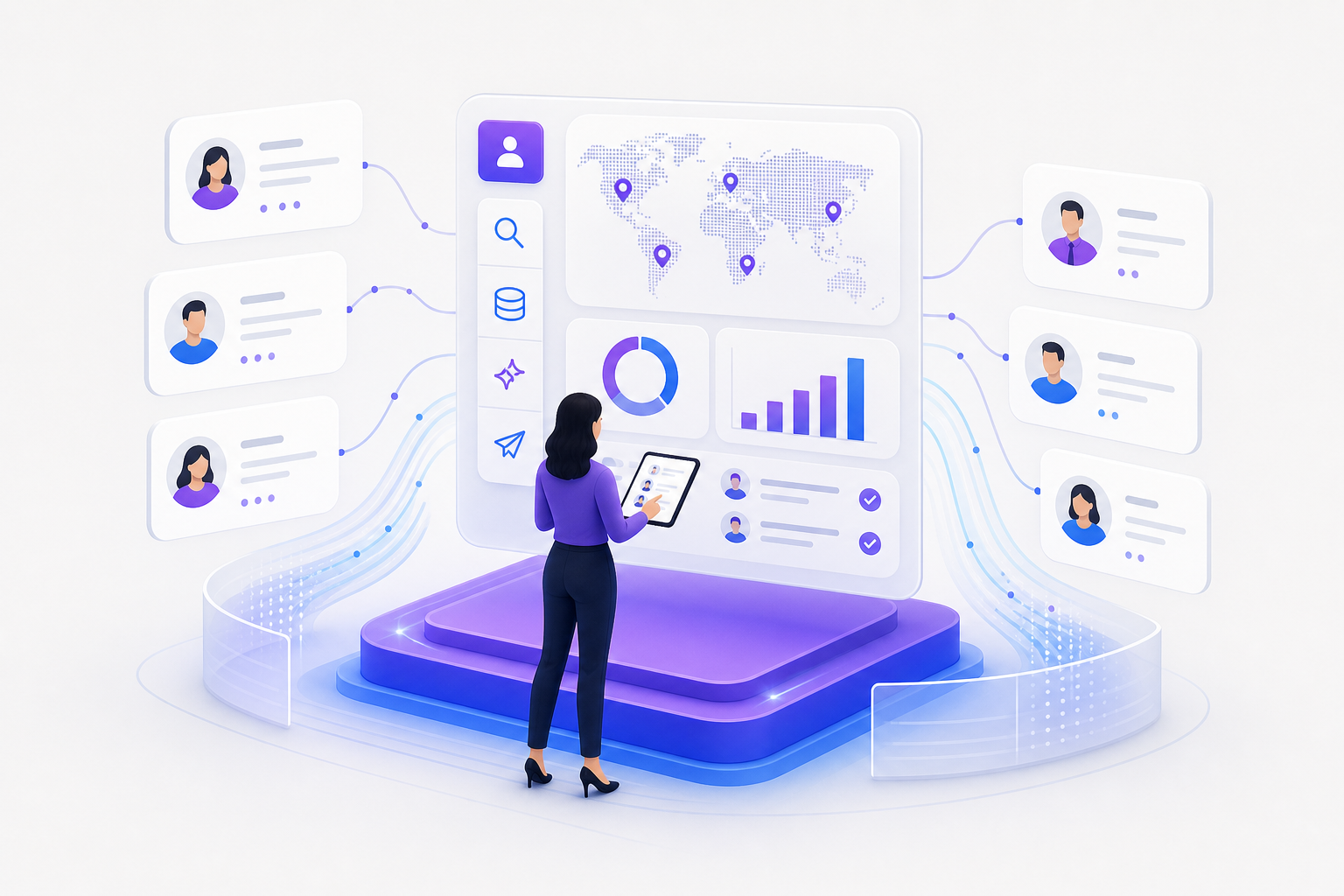
A talent intelligence platform is software that operationalizes that practice. It combines a candidate database, data enrichment, search and matching logic, and some form of outreach or workflow automation into a single product.
The key word is platform. A standalone LinkedIn scraper doesn't qualify. Neither does an ATS with basic keyword search. The category implies integration across at least three functions: discovery, enrichment, and engagement.
The Core Components
Not every product in this space covers all of these, but a mature talent intelligence platform typically includes:
Candidate Discovery
This is the search layer. You describe the candidate you're looking for, and the platform finds matching profiles from its database. Older tools required Boolean strings. Newer ones accept natural-language prompts, which is faster and more accessible for recruiters who aren't Boolean experts.
Discovery quality depends on two things: the size and freshness of the underlying database, and the accuracy of the matching logic. A large database with weak matching returns noise. Strong matching against a thin database misses candidates. You need both.
Data Enrichment
Raw profiles are rarely enough. A talent intelligence platform enriches profiles with verified contact information, work history summaries, and signals that help you prioritize outreach. The practical measure here is contact coverage: what percentage of matched profiles actually include a working phone number or email address?
Outreach Automation
Finding candidates is only half the job. A platform that stops at discovery forces you to copy-paste contact details into a separate sequencing tool, which defeats the purpose of an integrated workflow. Outreach automation closes that gap.
The channels matter too. Email-only outreach is table stakes. Platforms that add LinkedIn, SMS, and WhatsApp give you meaningfully more ways to reach passive candidates who don't monitor their inboxes.
Analytics and Reporting
Talent intelligence at the strategic level means understanding pipeline health, sourcing channel performance, and market benchmarks. Not every team needs this layer immediately, but it becomes important as hiring volume grows.
Who Actually Needs One?
The honest answer: not everyone.
If you're filling two or three roles per year through referrals and inbound applications, a talent intelligence platform is overkill. The cost and setup time won't pay off.
It starts making sense when:
- You're handling ten or more active roles at a time
- A significant portion of your hires need to come from passive candidates
- You're spending more time building lists and writing outreach than actually talking to candidates
- You're sourcing across multiple geographies, especially in Europe, where LinkedIn Recruiter's coverage is uneven
That last point is underappreciated. Many platforms in this category are built around US data, and their European coverage is thin. European recruiters end up paying for a database that doesn't actually serve their market.
Talent Intelligence Platform vs. AI Sourcing Tool: Is There a Difference?
In 2026, the line between these two labels has blurred considerably. Most products calling themselves AI sourcing tools now include some enrichment and outreach. Most talent intelligence platforms have added AI-powered search.
The practical distinction comes down to depth and integration. An AI sourcing tool typically focuses on discovery and enrichment. A talent intelligence platform implies a more complete workflow, from initial search through candidate engagement and pipeline tracking.
For most in-house sourcers working without a dedicated ops function, the useful question isn't which label applies. It's whether the tool covers the full sourcing-to-interview cycle without requiring you to switch between three other products to complete it.
What to Look for When Evaluating One
Database coverage for your market
If you're hiring in France, Germany, or the Benelux region, verify that the platform's database actually covers those markets with real, enriched profiles. Ask vendors for specific coverage numbers by country, not just a global headline figure.
Contact data quality
A database of 200 million profiles is only useful if the contact details are accurate. Ask what percentage of profiles include verified mobile numbers and email addresses. Approximate figures are fine — what you want to avoid is a platform that counts LinkedIn URLs as "contact data."
Outreach channels
Think about where your target candidates actually respond. Senior engineers in France are more likely to reply to a WhatsApp message than a cold email. Marketers in the US might respond better on LinkedIn. A platform that only supports email limits your options from the start.
Workflow integration
Does the platform connect to your ATS? Can you export shortlists? If your team is already using a specific system, check integration compatibility before committing.
Pricing relative to your volume
Enterprise-tier platforms often start at $10,000 or more per year. Gem's median annual contract sits around $24,900; hireEZ's around $13,000. Those numbers make sense for large TA teams with high hiring volume. They don't make sense for a solo sourcer or a three-person TA team at a mid-size company.
Where Kalent Fits
Kalent is an AI-native sourcing platform that covers discovery, enrichment, and outreach within a single workflow. You type a natural-language prompt describing the candidate you're looking for, and the platform matches against a database of 200M+ profiles covering Europe and the US.
Enriched profiles include AI-generated summaries and verified contact details, with approximately 80% mobile phone number and email coverage. From there, a conversational outreach agent handles engagement across LinkedIn, email, SMS, and WhatsApp — no separate tool required.
That combination is relatively rare. Most platforms in this space handle either search or outreach well, but not both. Very few include SMS and WhatsApp as native channels alongside LinkedIn and email.
The Copilot plan, which includes full multi-channel outreach, is priced at $149/month billed annually ($1,790/year) — materially below the median annual contract for every named enterprise competitor.
Kalent also integrates with 50+ ATS systems as an add-on, which matters if you need shortlists to flow directly into an existing hiring workflow.
The Honest Assessment
A talent intelligence platform is worth the investment when your sourcing volume is high enough that manual list-building is genuinely costing you time and hires. The category has matured enough in 2026 that you don't have to choose between good search and good outreach, or between European data coverage and affordable pricing.
What you do need to watch for is buying more platform than you need. If you're a solo recruiter or a small TA team, a full enterprise suite with complex onboarding and a five-figure annual contract is not the right starting point. Start with a tool that covers the full sourcing-to-interview cycle, integrates with your ATS, and fits a budget you can approve without a six-week procurement process.
Frequently Asked Questions
What is a talent intelligence platform?
A talent intelligence platform is software that combines candidate discovery, data enrichment, and outreach automation into a single workflow. It helps recruiters find passive candidates, access verified contact details, and engage them across multiple channels without switching between separate tools.
Is a talent intelligence platform the same as an ATS?
No. An ATS manages candidates who have already applied. A talent intelligence platform is used to find and engage candidates before they apply — particularly passive candidates who aren't actively job searching.
Do small recruiting teams need a talent intelligence platform?
It depends on hiring volume and how much of your time goes to manual sourcing. If you're handling ten or more roles per quarter and spending most of your time building lists rather than talking to candidates, a platform that automates discovery and outreach will pay for itself quickly. For very low hiring volume, the investment may not be justified.
What's the difference between a talent intelligence platform and an AI sourcing tool?
The terms overlap significantly in 2026. The practical difference is scope: AI sourcing tools typically focus on discovery and enrichment, while talent intelligence platforms imply a more complete workflow that includes outreach automation, pipeline tracking, and sometimes market analytics.
How important is European data coverage when choosing a platform?
Very important if you're hiring in Europe. Many platforms are built around US data, and their European coverage is thin. Before committing, ask for specific coverage numbers by country and verify that enriched profiles — not just raw LinkedIn data — are available for your target markets.
What outreach channels should a talent intelligence platform support?
At minimum, email and LinkedIn. Platforms that also support SMS and WhatsApp give you additional ways to reach passive candidates, particularly in markets where those channels are more commonly used for professional communication.
How much does a talent intelligence platform typically cost?
Pricing varies widely. Enterprise platforms like Gem have median annual contracts around $24,900. Mid-market options like hireEZ start around $13,000 per year. More accessible platforms like Kalent offer full multi-channel outreach starting at $1,790 per year, making the category reachable for smaller teams without a large procurement budget.
