
How to find phone numbers in recruitment?
Find phone numbers fast in recruitment: LinkedIn and Google operators, check with a reverse search or a call, then Kalent for high volumes.

For most sourcing, start with LinkedIn combined with Google operators, validate what you find with a reverse search or a test call, then switch to an enrichment tool like Kalent as soon as the volume of open roles exceeds what manual research can handle efficiently.
In short:
- Manual research via LinkedIn and Google is effective for getting phone numbers quickly, especially for active profiles.
- Using enrichment tools like Kalent becomes relevant as soon as the volume of roles to source exceeds the capacity of efficient manual research.
- Checking a number’s validity with a reverse search or a light call avoids wasting time on inappropriate or incorrect contacts.
- Calling a company’s switchboard directly remains a reliable method, especially if you use a short script to ask for the HR department or the right line.
- Consolidating sources and preparing targeted Google queries saves several minutes per search in a high-volume sourcing process.
Table of contents
- Finding a phone number in recruitment: methods to try in order
- How do you check that a number is valid before calling?
- Why use a sourcing platform like Kalent?
- What I have learned from sourcing candidates
- Speed up your sourcing without sacrificing contact quality
- Sources
- Frequently asked questions
Finding a phone number in recruitment: methods to try in order
Before turning to software, four to five manual techniques are often enough to get a usable number in under ten minutes. Here is the order that works best in the field, from fastest to most time-consuming.
1. LinkedIn search combined with Google operators. Many profiles deliberately display their number in the “contact info” section or directly in their summary, especially salespeople, freelancers and technical profiles actively looking. The reflex is to go through Google rather than LinkedIn’s internal search bar, which limits results for non-premium accounts. A query such as site:fr.linkedin.com "☎" "chef de projet" (06 OR 07) surfaces profiles that have included a phone symbol in their text, a widespread practice described in detail by L’École du Recrutement. The ☏ and ✆ symbols work just as well as ☎, and combining them in a single query widens the net without complicating the search.
2. Google operators applied beyond LinkedIn. The same logic applies to company websites, online CVs and professional directories.
"responsable commercial" "06" filetype:pdfto target CVs published onlineintitle:"contact" site:nomdelentreprise.frto locate a dedicated page"@nomdelentreprise.fr" "01" OR "06"to cross-reference a professional email address with a number displayed nearby
Adding the national code (33) or common mobile prefixes (06, 07) noticeably reduces the noise in the results, a tip confirmed by several experienced sourcers quoted by L’École du Recrutement.
3. The company directory and website. “Contact” pages and legal notices remain an underused source. Many recruitment agencies and firms display a direct number on their contact page, as shown for example by Osé Recrutement’s contact page. The same reflex works for the company of the candidate you are targeting: its contact page or form, like the one from Bienrecruter, often gives a switchboard number you can use as a last resort.
4. Enrichment tools. When manual research becomes time-consuming on a large volume of roles, an enrichment tool such as Kalent cross-references several sources to find a mobile number or a personal email tied to a profile. The golden rule is the same as for manual research: never contact a number without knowing where it comes from and why you are using it.
5. Your network and the direct ask. A short message to a mutual contact (“Hi, I am recruiting for a role that could interest X, would you have their direct contact?”) works particularly well at the end of the week, when LinkedIn replies become scarcer. It is slow, but the response rate often beats that of a cold message sent directly to the candidate.
6. The company switchboard. Calling reception remains underused even though it is one of the most reliable methods. A short script such as “Hello, I am trying to reach the HR department about a recruitment matter, could you put me through?” is enough in most cases, a practice documented by the contact pages of firms like Osé Recrutement.
Pro tip: Always keep two or three ready-to-use Google queries for each type of role you source regularly. You will save several minutes on every search, which adds up quickly on a volume of twenty or thirty profiles per week.
How do you check that a number is valid before calling?
A number you found is not a reliable number. Three quick checks prevent a failed cold call and an email flagged as spam.
- Reverse search: paste the number into Google in quotation marks to see whether it appears on other public pages, tied to the same name or the same company.
- Light call test: a short text or a brief call is enough to confirm the line is active before investing time in a full approach.
- Cross-checking sources: cross-referencing the company website, a professional directory and a press mention greatly reduces the risk of error, a cross-checking practice that is particularly useful for public contacts.
Telling a professional number apart from a personal one also changes your approach: a number displayed on a company contact page lends itself to a direct call, while a personal number found via LinkedIn deserves a message before any unsolicited call.
On compliance, keep in mind a simple rule from the GDPR: collect only what is necessary for your recruitment purpose, and do not keep a number beyond the time the process needs it. Systematically documenting where each number came from (source, date, method used) protects you in case of an objection request or an audit, a good practice recommended by sourcing specialists.
Why use a sourcing platform like Kalent?
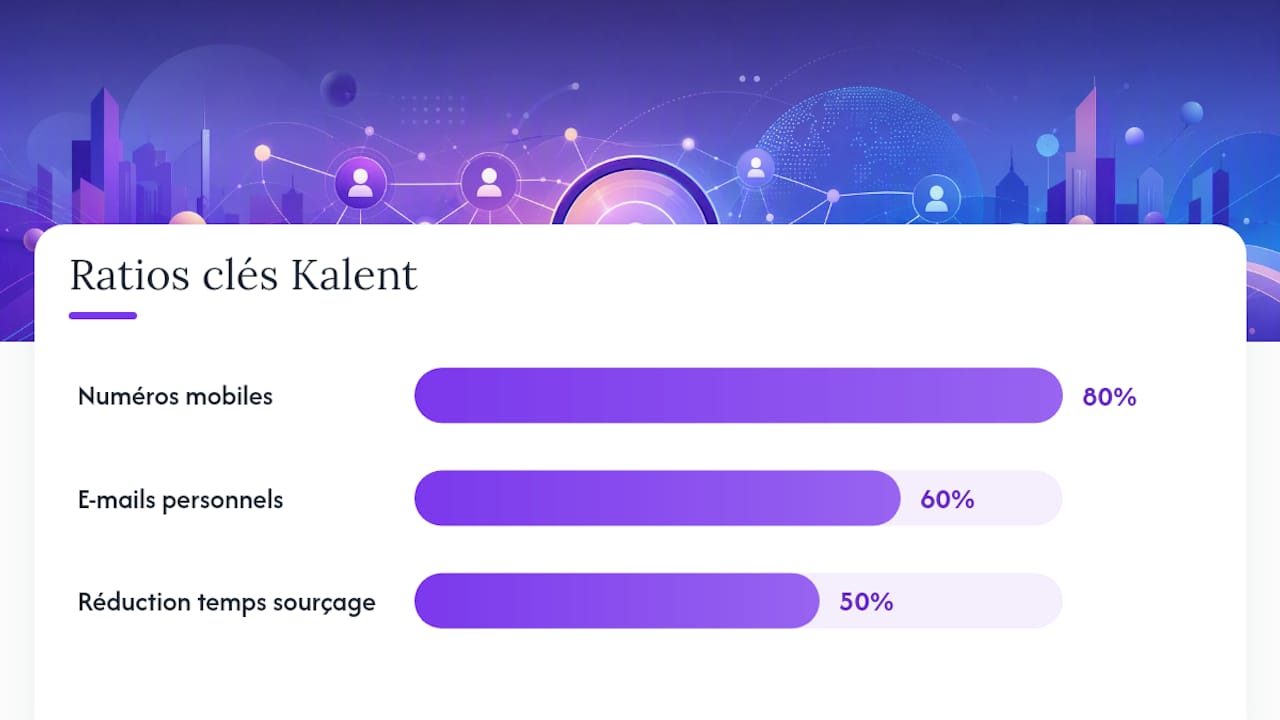
Manual methods quickly reach their limits as soon as the volume of roles grows. Kalent relies on a search engine able to filter through more than 200 million profiles in Europe and the United States, with access to 80% of mobile phone numbers and 60% of personal emails according to data published by the vendor.
The typical flow follows a simple logic.
- Profile search by role, location or skills criteria
- Automatic enrichment of contact details
- Automation of the first message via LinkedIn, email or WhatsApp
- Sourcing stage tracking synced directly with the ATS
This automation cuts sourcing time in half according to the vendor, but it does not replace a manual check on sensitive roles (executives, confidential positions), where a poorly calibrated contact can hurt the reputation of the hiring company.
Pro tip: Use automatic enrichment for volume, and keep manual checks for the ten or twenty profiles that really matter in your pipeline.
What I have learned from sourcing candidates
Speed never replaces contact quality on a strategic role. For a key role, three verified numbers beat a list of fifty approximate contacts. Automation is an accelerator, not a substitute for a minimum of personalization: a copy-pasted message on WhatsApp is spotted immediately and closes doors. Keep a simple checklist: number source noted, clear purpose, message tailored to the profile, never a cold call without context.
Jules
Speed up your sourcing without sacrificing contact quality
Spending hours cross-referencing Google operators and contact pages works, until the volume of roles explodes and calls for a more efficient strategy such as industrial FIFO recruitment marketing. Kalent is built for that exact moment: a single search across more than 200 million profiles, automatic enrichment of numbers and emails, then multichannel outreach launched without manual re-entry on LinkedIn, email or WhatsApp.
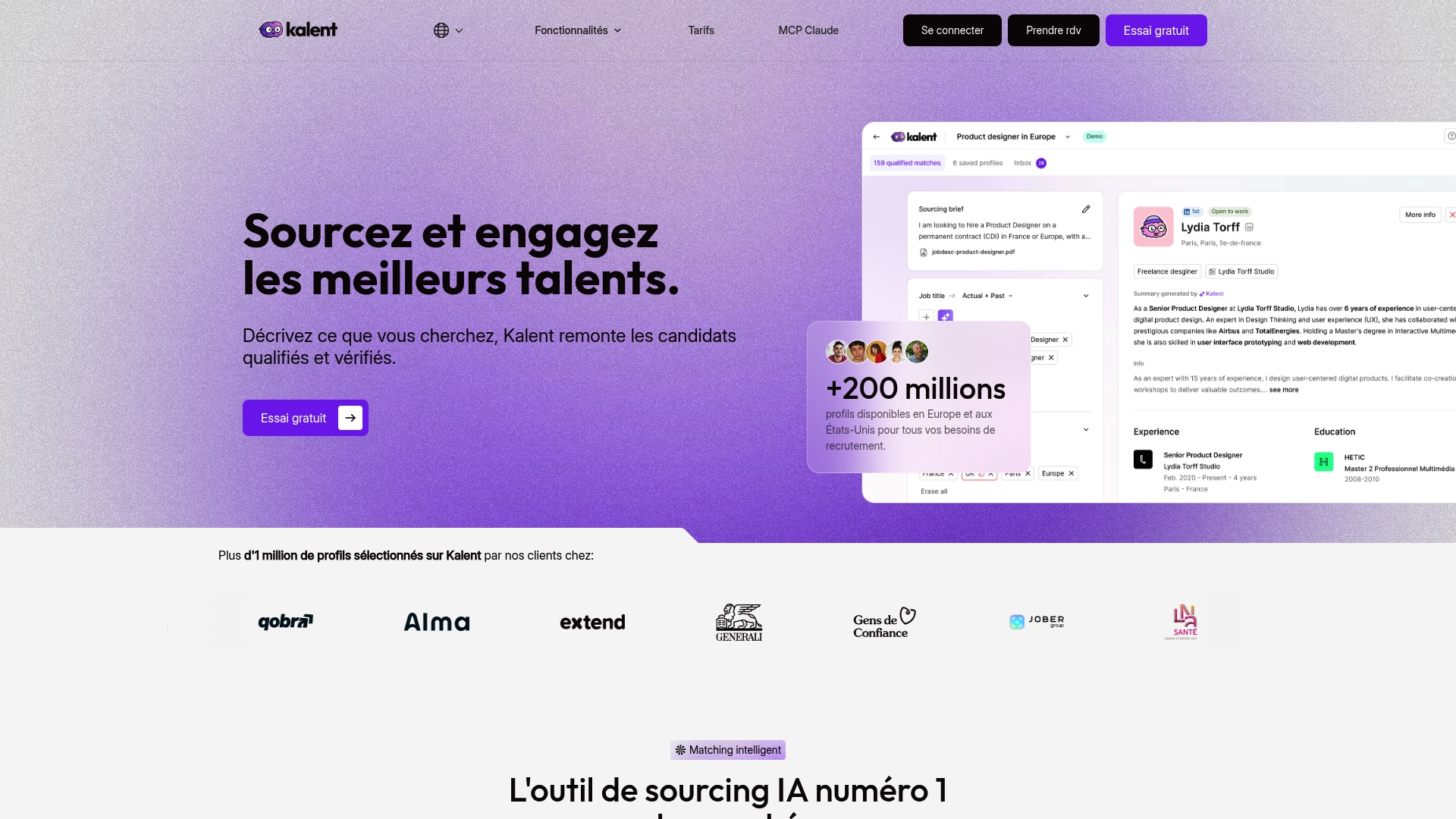
The platform can integrate with an ATS to track every sourcing stage, from first contact to the candidate’s reply, which saves you from juggling several different tools for a single hire. If you manage several open roles in parallel, testing Kalent talent search on your next urgent need gives a concrete idea of the time saved from the very first candidate list generated. Book a demo on the Kalent page to see the search engine and enrichment at work on your own role criteria.
Sources
The Google operator and LinkedIn symbol techniques come from L’École du Recrutement. For verifiable public contacts, the Élus de France directory relies on the Répertoire national des élus (French national register of elected officials).
- Hack: easily find phone numbers - L’École du Recrutement
- Bienrecruter
- Contact Osé Recrutement - Ose Recrutement
Frequently asked questions
Is it possible to contact a recruiter by phone?
Yes, most firms and agencies display a switchboard number on their contact page, like Osé Recrutement’s. Asking to be transferred to the right person remains the most direct method.
Which site should you use to find someone’s phone number?
There is no single site that is reliable in every case: LinkedIn combined with Google operators remains the most effective starting point for a professional profile. For a large volume of searches, an enrichment platform like Kalent cross-references several sources automatically.
How do you find a phone contact quickly?
First try a Google query combining the company name, a phone symbol and a mobile prefix, then check the contact page of the official website. If both leads fail, a call to the company switchboard often gets you the right number directly.
How do you find a person’s mobile number?
A personal mobile number sometimes appears in the summary or contact info of a LinkedIn profile indexed by Google. Failing that, a direct request through a mutual contact remains more reliable and more respectful than persistent searching on third-party sources.


