Recruiting cold email: the method that still works in 2026
Learn why cold email still works for recruiting in 2026: GDPR compliance, precise targeting, and very short, personalized messages.
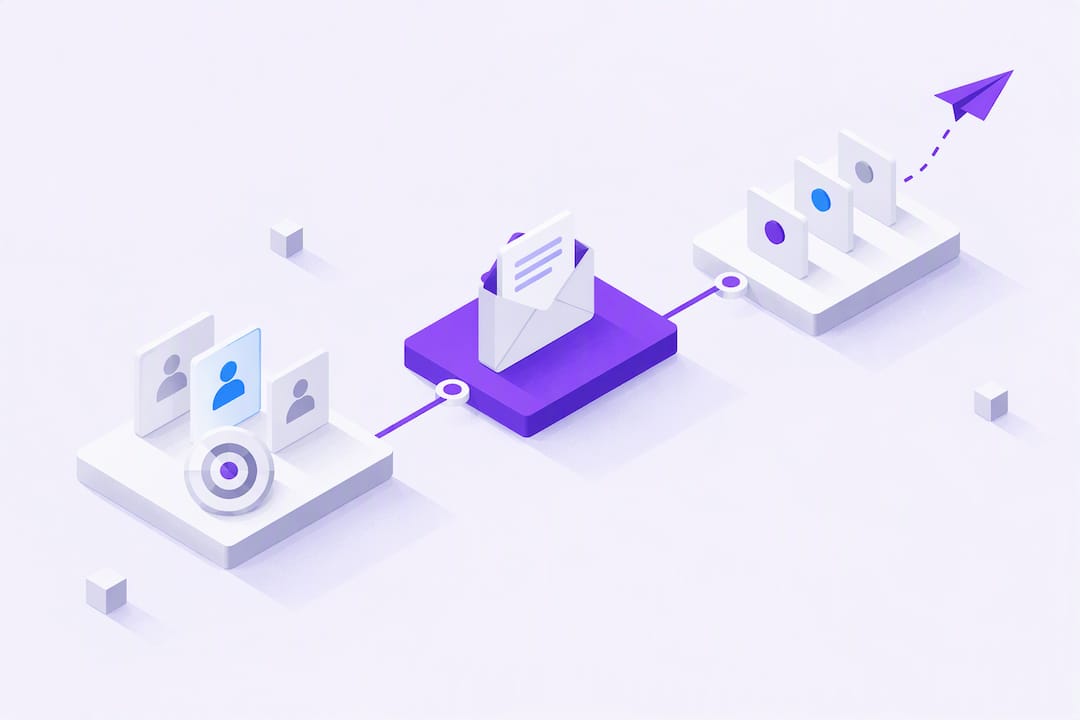
Cold email remains a relevant channel for reaching passive talent if we respect the GDPR, focus on the quality of the target and write ultra-short, personalized messages. The golden rule: ten verified, relevant emails beat a list of a thousand contacts bought indiscriminately. Compliance and targeting precision come before volume.
In short:
- Cold email remains effective for contacting passive profiles, as long as you respect the GDPR, target precisely and favor short, personalized messages.
- Regulatory compliance requires clearly identifying the recruiter, offering a simple way to unsubscribe and being able to justify where contacts came from.
- A targeted send, based on recent behavior or a concrete project, far outperforms mass campaigns, especially with a short, mobile-friendly message.
- Technical preparation of the sending domain, notably through warmup and checking SPF, DKIM and DMARC settings, is essential to avoid being filtered.
- The three-email rule, with sends spaced three to five days apart, optimizes the reply rate while respecting the right to object at every step.
Table of contents
- Why cold email still works and what limits to expect
- GDPR/CNIL compliance for recruitment outreach
- Anatomy of a recruiting cold email and reusable templates
- Sequences and timing: applying the 3-email rule to recruiting
- Technical deliverability: warmup, sending domains and essential checks
- KPIs to track, A/B tests and continuous optimization
- Automating without losing the human touch: our take on hybrid sourcing
- How Kalent simplifies sourcing and compliant multichannel outreach
- Frequently asked questions
- Sources
Why cold email still works and what limits to expect
Cold email keeps a special place in the recruiter's toolkit because it reaches directly the profiles who never respond to published job ads. A passive candidate doesn't browse job boards, but they do read their work emails, especially when the message arrives at the right moment and talks about their craft rather than a generic position.
The channel does have concrete limits, however. Inbox saturation leads many candidates to ignore or report messages that look like mass solicitation, which exposes the sender to lasting reputational risk on their sending domain. A recruiter who sends hundreds of identical messages ends up hurting their own deliverability, including for their next legitimate campaigns.
In practice, cold email delivers value mainly in a few specific cases:
- Contacting a senior developer who has just published a notable technical project on GitHub or LinkedIn.
- Reaching back out to a candidate who applied several months ago for a similar position.
- Approaching a rare profile in a niche market where traditional channels (job boards, agencies) have already failed.
In these situations, a short, well-researched message far exceeds the reply rates of an untargeted mass campaign.
GDPR/CNIL compliance for recruitment outreach
Email outreach rests on a precise legal framework that every recruiter must know before sending a single message. The CNIL allows B2B outreach without prior consent when the solicitation relates to the recipient's job functions and offers a simple way to object. This allowance relies on the notion of legitimate interest, but it does not exempt senders from information and transparency obligations.
Recruiting, however, is not strictly the same as commercial prospecting. The CNIL's recruitment guide points out that the collection of candidate data must be limited to what is strictly necessary, that the purpose must be clearly identified from the first contact, and that the retention period for the information must be defined and communicated. A recruiter cannot reuse a database of commercial prospects for sourcing purposes without informing the people concerned.
Three obligations shape every compliant campaign:
- Clearly identify yourself as a recruiter or agency and state the purpose of the message in the first lines.
- Provide a simple, free way to object to any further contact, with no pre-checked box or complex form.
- Document the source of the contact so you can justify the legitimacy of the approach if asked.
The average inbox placement rate observed in the Validity 2026 deliverability report is a reminder that a non-compliant or poorly built campaign gets filtered before it is even read.
The CNIL's golden rules for electronic prospecting also stress fair collection of addresses: buying an email list without knowing where it comes from exposes you to the risk of a complaint, regardless of the quality of the message sent.
Anatomy of a recruiting cold email and reusable templates
An effective recruiting cold email follows the 30-second rule: the recipient must understand the purpose of the message, what's in it for them and the expected action without scrolling on their phone. This mobile constraint calls for a precise structure.
- Subject line: short, concrete, with no superlatives or excessive capital letters.
- Hook: one sentence mentioning a verifiable detail specific to the recipient (project, post, recent promotion).
- Proof: one line connecting that detail to the role on offer, without HR jargon.
- Call to action: a simple question asking for a yes-or-no answer rather than a heavy commitment.
Four formats cover most of the needs of a recruiting sequence:
- Initial outreach: "Hi [First name], I saw your talk on [specific topic]. We're hiring a [role] and your background in [skill] caught my attention. Would you be open to a 15-minute chat this week?"
- Short follow-up: "Hi [First name], I'm following up on my previous message about the [role] position. A simple yes or no is enough for me to know whether it interests you."
- Message after an event: "Hi [First name], congratulations on [event, promotion, funding round]. It made me want to share an opportunity at [company] that could fit well with this milestone."
- Closing message (break-up): "Hi [First name], I'm closing this file on my end since I haven't heard back, but the door stays open if the [role] opportunity interests you later."
Personalization should only rely on a verifiable, recent detail: a published project, a public talk, a job change. Made-up or approximate personalization is spotted immediately and hurts the message's credibility, a point also developed in this guide to personalizing B2B emails.
Sequences and timing: applying the 3-email rule to recruiting
The three-email rule shapes almost every effective cold email sequence: an initial message, a short follow-up, then a closing message. For recruiting, spacing each step three to five business days apart gives the candidate time to respond without feeling excessive pressure.
This standard sequence can be adjusted based on the signals observed:
- An open with no click or reply justifies a follow-up that rephrases the hook from a different angle rather than simply repeating it.
- A click on a link with no reply signals real interest: the follow-up can then directly suggest a call slot.
- A visit to the recruiter's LinkedIn profile after the send deserves a more direct message, since the candidate clearly took the time to look into it.
- No interaction at all after three messages should trigger the end of the sequence rather than a fourth follow-up, which degrades the overall reply rate and sending reputation.
The right to object applies at every step of the sequence: any removal request must be handled immediately, without waiting for the end of the planned cycle.
Technical deliverability: warmup, sending domains and essential checks
The best sequence in the world fails if the messages never reach the recipient's primary inbox. Sending a large volume directly from the company's main domain, without preparation, exposes that domain to being classified as spam, which can last several weeks.
A dedicated sending domain, prepared through a gradual warmup phase over two to three weeks, limits this risk by building a sending reputation before launching campaigns at real volume.
A few technical checks remain essential before any bulk send:
- Configure SPF, DKIM and DMARC records on the sending domain to authenticate messages with mailbox providers.
- Monitor the bounce rate and immediately remove invalid addresses from the active database.
- Delete or pause inactive addresses after several follow-ups with no opens, to protect the domain's overall reputation.
- Cap the daily volume per sending mailbox rather than concentrating all messages on a single address.
The average inbox placement rate according to the Validity 2026 report clearly illustrates the gap between technically sound campaigns and those that neglect these basic settings, often for lack of properly configured automation tools.
KPIs to track, A/B tests and continuous optimization
Measuring a recruiting cold email campaign means tracking a few key indicators rather than an exhaustive list of secondary metrics. The comparison of open rates across email, LinkedIn and WhatsApp offers a useful benchmark for placing your own results against other contact channels.
- The open rate tells you about the quality of the subject line and the health of the sending domain.
- The qualified reply rate matters more than the raw reply rate, which includes refusals.
- The meeting booking rate remains the final indicator that validates the relevance of the targeting and the message.
- The bounce rate must stay low at all times, or it will degrade the deliverability of subsequent campaigns.
A simple A/B test, limited to a single variable such as the subject line or the hook, yields actionable conclusions on a sufficient sample before any wider rollout. A sequence that generates qualified meetings deserves to be duplicated on a neighboring segment; a sequence with no replies after several sends should be reworked or dropped rather than relaunched as is.
Automating without losing the human touch: our take on hybrid sourcing
Cold email works better as a complement to a LinkedIn touchpoint or a call than as a standalone channel, because each touchpoint reinforces the credibility of the previous one. Automating sourcing frees up time to polish personalization where it really counts, without ever sacrificing the employer brand to speed of execution.
Jules
How Kalent simplifies sourcing and compliant multichannel outreach
Building a qualified database, verifying each contact and meeting CNIL obligations takes time when these tasks remain manual. Our talent search engine gives access to more than 200 million profiles in Europe and the United States, with 80% of mobile numbers and 60% of personal emails enriched, which limits bounces and speeds up contact verification before any send.
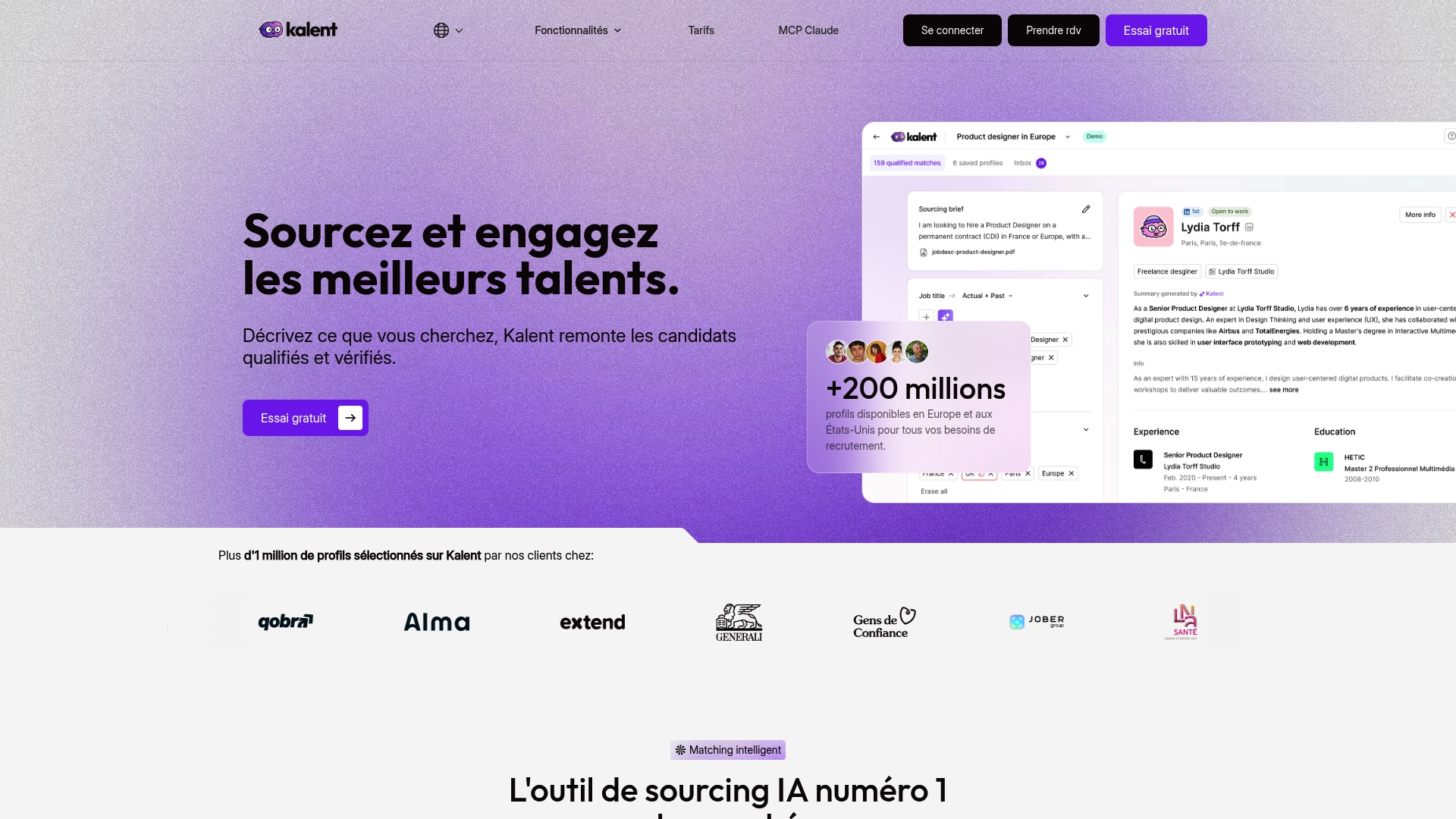
Automating outreach via LinkedIn, email and WhatsApp from a single platform cuts sourcing time, while keeping a record of sources that helps document where the data comes from, as the CNIL recommends. To test these features on your own searches, check out our pricing page and start a trial.
This article is general information and does not replace the advice of a qualified lawyer. Consult a qualified legal professional about your personal situation before acting on this content.
Frequently asked questions
What is the best cold emailing software for recruiting?
The choice depends mostly on your needs for data enrichment and multichannel automation rather than on a universal ranking. A platform like Kalent combines sourcing, contact enrichment and automated sending via email, LinkedIn and WhatsApp, which simplifies the move from targeting to compliant sending.
What is the 3-email rule in outreach?
This rule structures a sequence in three steps: an initial message, a short follow-up a few days later, then a closing message if no reply comes. It avoids over-soliciting while giving the recipient several chances to respond without excessive pressure.
Can you get paid to send outreach emails?
This activity generally corresponds to a recruiter, sourcing specialist or talent acquisition consultant role within a company or agency. It is not practiced as a freelance task paid per email sent, but as a skill built into an HR role.
How do you recognize a reliable recruiting website?
A reliable site clearly states its privacy policy, the retention period for candidate data and how to exercise the right to object, in line with the requirements of the CNIL's recruitment guide. Transparency about where the data comes from and the ability to contact a data controller are good indicators.
Is recruiting cold email legal without prior consent?
Yes, under conditions: the CNIL allows B2B outreach without prior consent when the message relates to the recipient's job functions and offers a simple way to object. Recruiting adds an extra obligation to inform people about the purpose and the retention period of the data collected.
Sources
A recruiting cold email campaign always starts before the message is written, with the definition of an ideal candidate profile. This targeting work shapes everything else: the more precise the target, the shorter and more direct the message can be without sounding generic.
Micro-segmentation refines this approach by splitting the database by concrete signals: tenure in the current role, technology mastered, location, or a recent event such as a promotion or a public talk. A message sent to a segment of ten profiles sharing the same professional context almost always gets a better reply rate than a generic send to a thousand contacts.
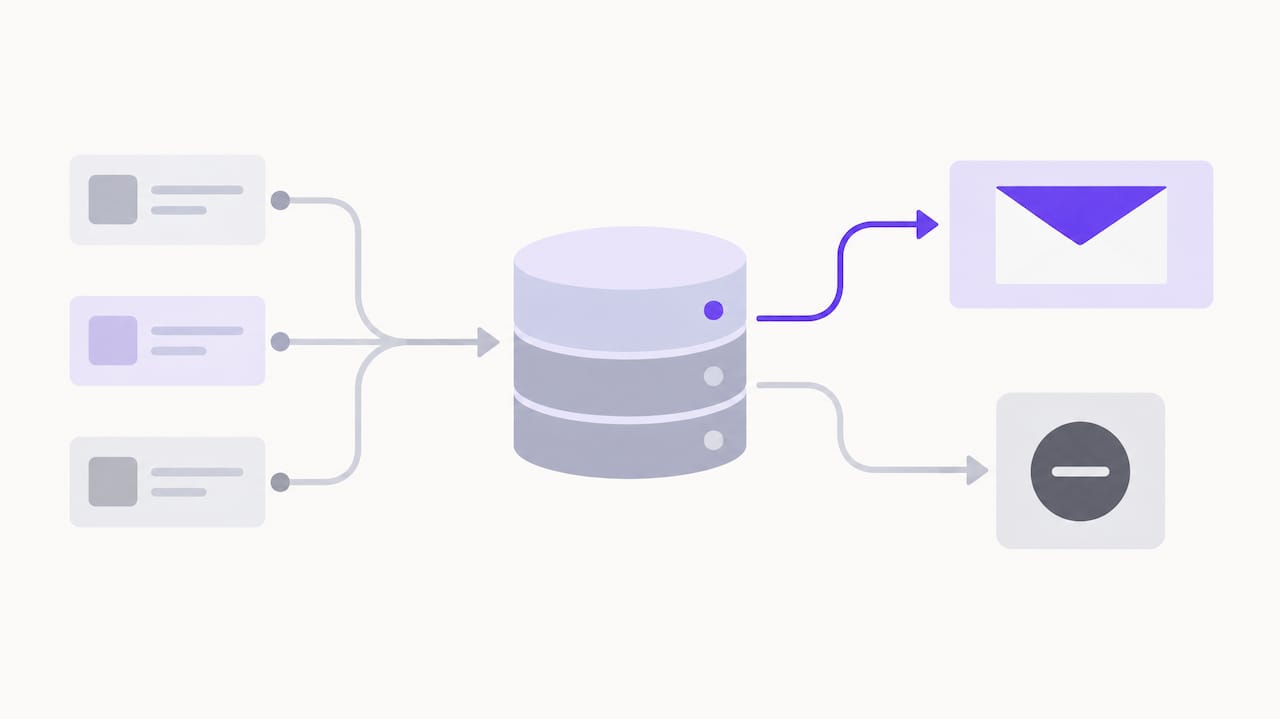
Before any send, the provenance of the data must be traceable, in line with the requirements of the CNIL's recruitment guide. The most common compatible sources include:
Before sending, each email address should be technically verified to limit bounces, which directly degrade the sending domain's reputation. A reverse email search lets you confirm that an address really matches the targeted profile, but it quickly shows its limits at high volume, which pushes most teams to automate this step.
Pro tip: Before launching a sequence, test the entire message on your own phone to check that it fits on a single screen, without scrolling.