
Recruitment digitalization: which quick wins to launch first?
Automate interview scheduling and hiring documents first: recruitment digitalization can cut time to hire by up to 30%...

Yes, recruitment digitalization pays off, provided you start small. Top priority goes to repetitive, low-value tasks: application acknowledgments, interview scheduling, administrative onboarding. Automating these flows can cut time to hire by up to 30% according to IBM. In practice, automate appointment booking and hiring documents first, before touching sourcing.
In short:
- Recruitment digitalization should start by automating repetitive tasks such as scheduling and onboarding to secure a fast return on investment.
- The right tool integration architecture relies on an open API, GDPR compliance, ease of adoption and a controlled total cost, especially for a modular architecture.
- Digitalization can cut time to hire by up to 30% and the likelihood of administrative oversights by about 70%, saving time and lowering costs.
- It is crucial to test and measure on a small scope first, to avoid rolling out disorganized automation that could hurt the quality of the process.
- Automation should never replace human judgment on important decisions, especially the final selection, to avoid dehumanizing recruitment.
Table of contents
- What exactly is recruitment digitalization?
- What concrete gains can your HR team expect?
- Where should your digitalization roadmap start?
- Which tools to choose without getting trapped on integration?
- How to measure your project’s return on investment?
- What risks to anticipate before digitalizing at scale?
- How does an AI sourcing platform apply these principles?
- Priorities and mistakes to avoid, according to Jules
- Kalent, an option to speed up your sourcing
- Sources
- Frequently asked questions
What exactly is recruitment digitalization?
Recruitment digitalization refers to integrating digital tools and artificial intelligence into every step of the hiring process, from sourcing to onboarding. The term differs from two related notions that are often confused with it.
Digitization simply means turning a paper document into a digital file (a scanned resume, a contract as a PDF). Digitalization goes further: it redesigns the process itself around digital tools. Automation, for its part, refers to running a specific task within this digitalized process without human intervention, such as automatically sending a technical test after an application.
The digital transition of recruitment covers four main steps:
- Sourcing: identifying and approaching candidates using smart search engines.
- Screening: sorting resumes and automated scoring against defined criteria.
- Interviews: automated scheduling, video conferencing, sometimes AI-assisted assessment.
- Onboarding: document generation, administrative checklist, access to internal tools.
The technologies involved combine natural language processing (NLP) to analyze applications, workflow orchestrators such as Make or n8n to connect applications to each other, and APIs that let an ATS talk to a data enrichment tool or an e-signature platform. It is this connected architecture, more than any single tool, that makes the difference between effective digital recruitment and a mere stack of software.
What concrete gains can your HR team expect?
The benefits of a digital recruitment strategy are measured first in time and money. Automating sourcing, resume screening and scheduling can cut time to hire by up to 30%, a figure that matches the experience of many HR teams that have industrialized their first steps.
The key figure: SMBs that automate their onboarding report a reduction of about 70% in administrative oversights, saving several HR hours per hire. Over a volume of 20 hires a year, that is significant recruiter time freed up for higher-value tasks.
The benefits fall along three axes:
- Lower cost per hire: fewer HR hours spent on repetitive tasks, so a lower unit cost per hire.
- Better candidate experience: automatic acknowledgments and shorter response times strengthen the employer brand, even when candidates are turned down.
- More HR capacity without additional internal hiring: the same team can handle more open applications at the same time.
This last point matters especially for recruiters who manage several roles in parallel with constant resources. Digitalization does not replace the team, it absorbs the volume the team could not process manually within the same timeframe.
Where should your digitalization roadmap start?
The method that works best starts with an audit, not with buying a tool. A targeted audit helps identify “quick wins” such as onboarding, interview scheduling or application acknowledgments, which deliver a fast and visible return on investment. This step-by-step approach also limits internal resistance to change, a factor often underestimated in HR projects.
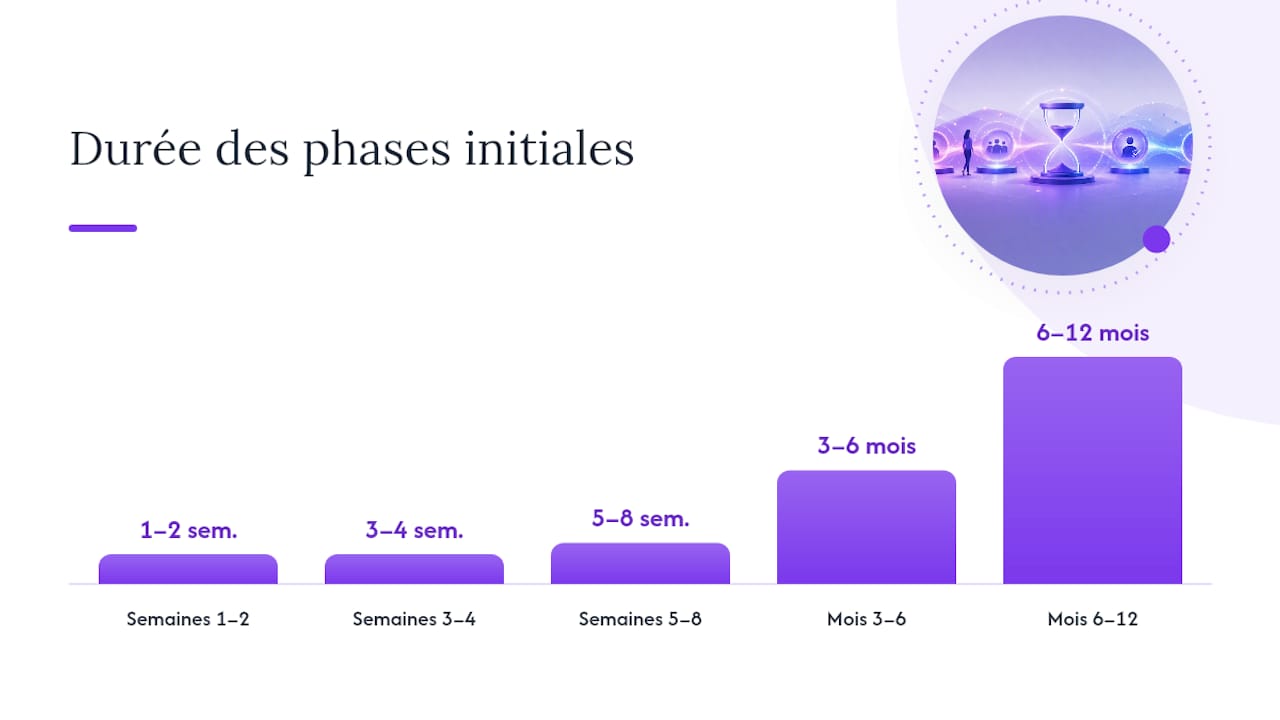
Here is the sequence to follow over the first six to twelve months:
- Weeks 1 to 2: audit of existing processes. Map every step of your current recruitment and time the HR hours consumed per task.
- Weeks 3 to 4: selecting quick wins. Pick two or three tasks to automate first, those with the highest ratio of time saved to technical complexity.
- Weeks 5 to 8: pilot. Roll out automation on a limited scope (one team, one type of role) and measure the results.
- Months 3 to 6: industrialization. Extend the validated automations to all recruitment, adjusting settings based on feedback from the pilot.
- Months 6 to 12: orchestration. Connect the tools to one another to create a continuous flow, from sourcing to onboarding, while keeping human checkpoints.
Each phase deserves a monthly review with simple indicators: average time per step, candidate response rate, number of administrative errors avoided.
Pro tip: Never run a pilot on your most strategic role. Test first on a high-volume profile, where mistakes cost little and time savings show quickly.
Which tools to choose without getting trapped on integration?
The choice of architecture matters more than the choice of any single brand. Five categories of tools make up a coherent digital recruitment project: the applicant tracking system (ATS), the workflow orchestrator, the contact data enrichment tool, the interview scheduling platform, and the e-signature solution for hiring documents.
Four criteria determine whether a tool integrates cleanly with your existing setup:
- The availability of an open API, without which no smooth connection between tools is possible.
- GDPR compliance, verifiable through clear documentation on hosting and on how long candidate data is kept.
- Ease of adoption by teams, which determines the actual usage rate after rollout.
- The total cost including training, often left out of advertised price comparisons.
Orchestration tools such as Make or n8n can, for example, post a job ad to several job boards at once and automatically sync every application received to the ATS. An SMB will often favor an integrated suite that is simple to set up on its own, while a large enterprise will invest more in a modular architecture, able to absorb far higher application volumes and multiple legal entities. A comparison of sourcing tools helps visualize these differences in positioning before any contractual commitment.
How to measure your project’s return on investment?
Three indicators are enough to steer a digitalization project without drowning in dashboards: time-to-hire (the time between opening the role and signing), cost-per-hire (total cost divided per hire) and the candidate drop-off rate (the share of candidates who leave the process before the final decision).
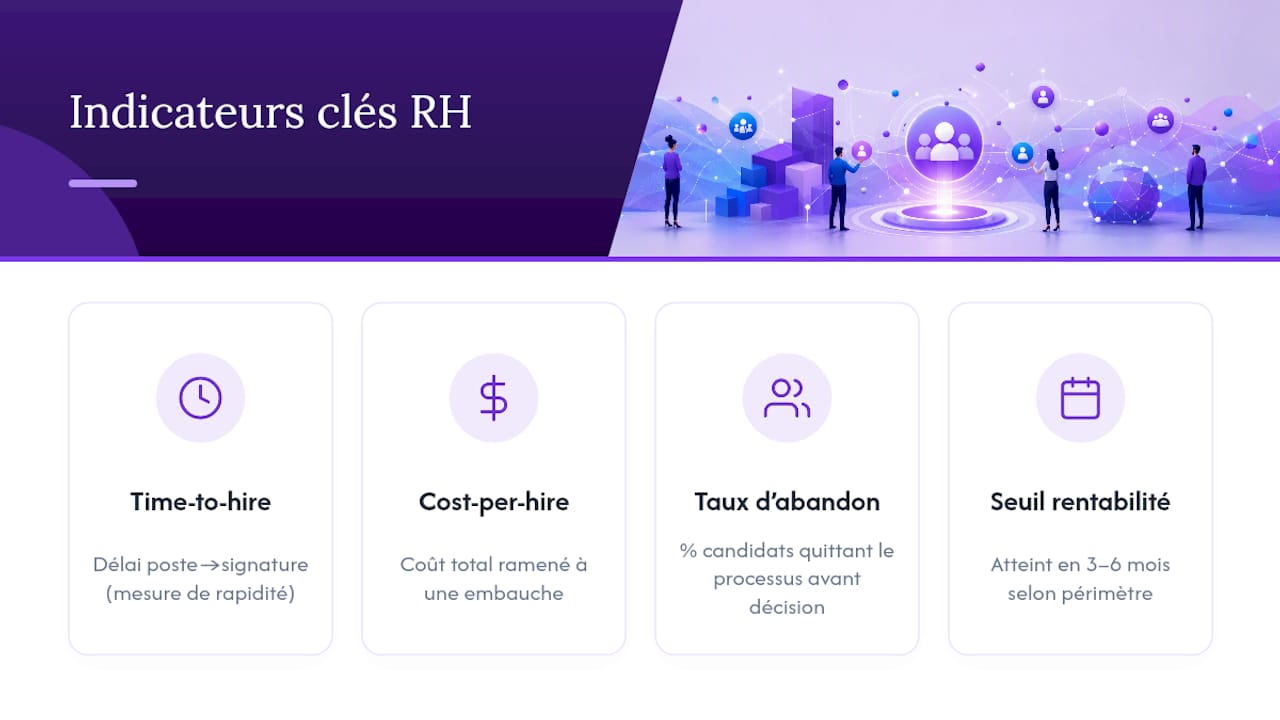
The profitability calculation stays simple: compare the project cost (license, implementation time) with the HR hours saved, multiplied by the team’s fully loaded hourly rate. Well-scoped projects reach their break-even point between 3 and 6 months, depending on the size of the automated scope.
What risks to anticipate before digitalizing at scale?
Three risks come up again and again in poorly framed HR digitalization projects: algorithmic bias in automated resume scoring, failure to comply with GDPR on candidate data, and the dehumanization of the recruitment journey.
A few principles limit these pitfalls:
- Have a human review every automatically generated rejection decision, especially at the screening stage.
- Regularly test your scoring criteria on varied samples to detect bias related to gender, age or education.
- Meet the documentation obligations tied to hiring from the design of your onboarding workflow, not after the fact.
- Keep the final interview and the cultural fit assessment for a human recruiter, never an algorithm.
Automation eliminates low-value tasks, it does not replace human judgment on the decisions that truly matter.
Pro tip: *Set a simple rule before launching a pilot: no application rejection decision goes out without human validation during the first three months.
How does an AI sourcing platform apply these principles?
Kalent is a concrete illustration of this digitalization logic applied to sourcing.
- Contact data enrichment: Kalent offers contact data enrichment, useful for engaging a candidate beyond a LinkedIn message alone.
- Multichannel outreach automation: coordinated sending across several channels, with tracking of sourcing steps.
- Integration with existing ATSs, to make application management easier.
Before integrating any tool of this kind into your architecture, check its GDPR compliance and its governance terms for candidate data.
Priorities and mistakes to avoid, according to Jules
The biggest mistake seen in HR digitalization projects is automating in the wrong order: teams tackle sourcing before making onboarding reliable, when the reverse is often what pays off fastest. Measuring before expanding remains the most neglected rule. Many teams roll out a tool across all their recruitment without having validated the results on a limited scope.
Automation must remain a tool serving the recruiter, never a substitute for their judgment on final decisions. Train your teams before rollout, and secure a clear executive sponsor: without one, the project runs out of steam at the first technical obstacle.
Jules
Kalent, an option to speed up your sourcing
Kalent positions itself as an alternative to time-consuming manual sourcing methods, offering access to a large number of qualified candidates in Europe and the United States, with enriched contact details.
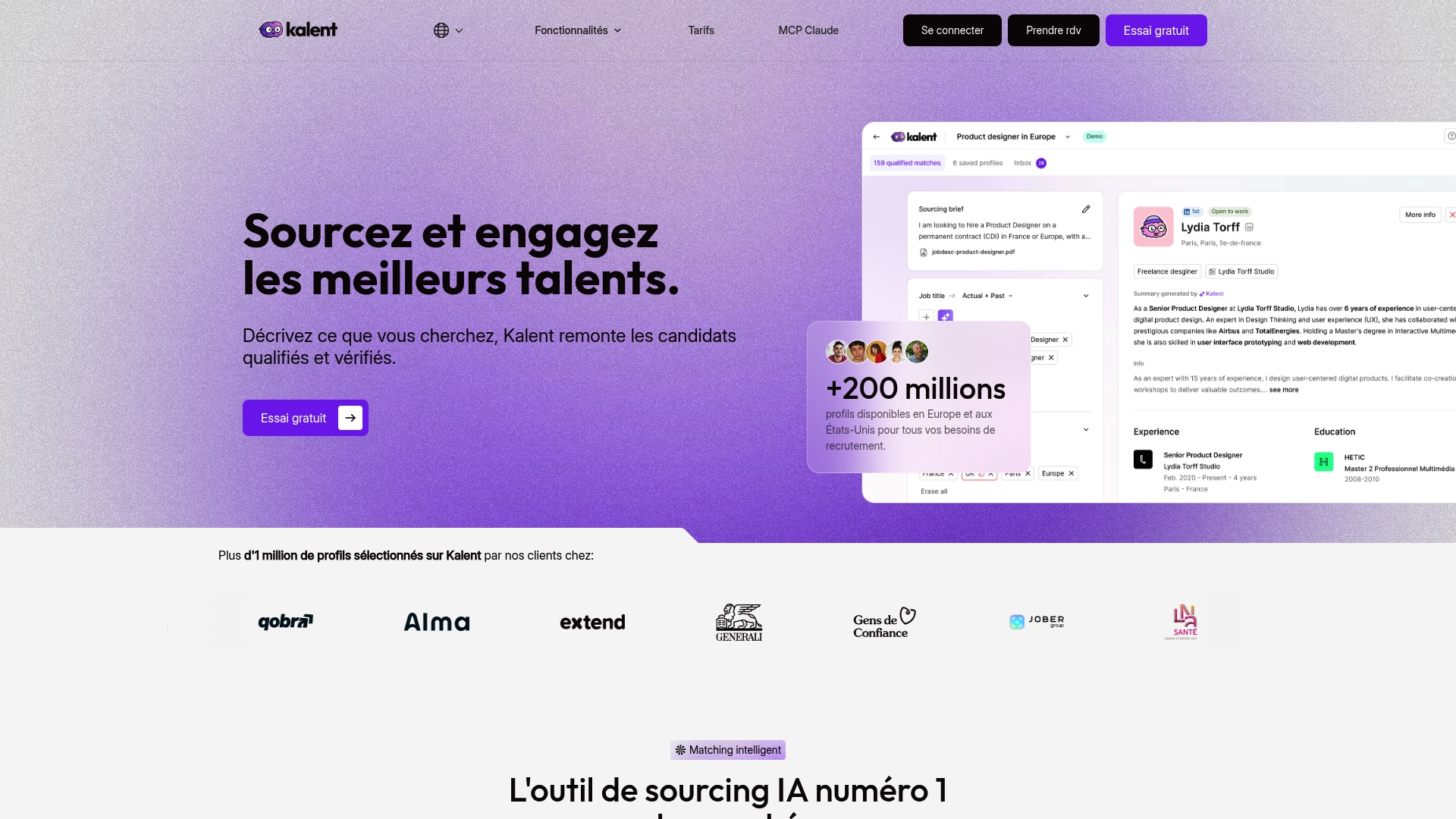
For an HR team handling a large volume of open roles, or for a solo recruiter who has to cover several mandates alone, the promise is simple: less time spent searching, more time spent talking with the right candidates. Kalent’s matching technology identifies relevant profiles based on the context of the role, while data enrichment gives access to mobile numbers and personal emails to move beyond LinkedIn as the only channel.
If your digitalization roadmap includes an overhaul of sourcing, book a Kalent demo to see in practice how the platform integrates with your current ATS.
Sources
- Workflow automation, Deel (article)
- Recruitment automation, IBM
- Service-public
- Recruitment automation with AI, Hutch Agency
Frequently asked questions
What are the three pillars of recruitment digitalization?
The three pillars are dematerializing data (digitization), redesigning processes around digital tools (digitalization in the strict sense), and automatically running repetitive tasks (automation), which fit together from sourcing to onboarding.
Will AI replace recruiters and HR managers?
No: AI and automation absorb low-value tasks such as initial resume screening, but final hiring decisions remain human, to preserve judgment on cultural fit and compliance.
What are the 4 steps of the digitalized recruitment process?
The four steps are sourcing (identifying and approaching candidates), screening (sorting and scoring), interviews (scheduling and assessment) and onboarding (documents and administrative access).
How to digitalize recruitment without getting the order of priorities wrong?
Start with an audit of the most repetitive tasks, such as onboarding or interview scheduling, before investing in more advanced sourcing tools like Kalent, which deliver their full return once the basics are automated.


