
Cost per hire: the formula and the costs to include
Calculate cost per hire with the formula, the costs to include and the pitfalls (employer contributions, relief such as the RGDU): €5,000 to €8,000.

Cost per hire comes from a simple formula: (internal costs + external costs + indirect costs) ÷ number of hires. In France, it most often sits between €5,000 and €8,000 depending on the role, but that figure often ignores employer social contributions, relief schemes such as the RGDU and the hidden costs of a vacant position. Without these elements, your recruitment budget stays approximate.
In short:
- The total cost of a hire in France generally ranges from €5,000 to €8,000, but it can rise for rare or hard-to-fill roles that call on an external agency.
- Most of the cost comes from internal and external spending and, above all, from the indirect costs of the vacant position or of onboarding the new employee.
- Avoid counting only the gross salary; always include employer contributions, relief schemes such as the RGDU, and costs tied to bonuses or industry-specific contributions.
- Time to hire, the sourcing method used and the failure rate weigh heavily on the final cost, which can end up 3 to 5 times higher than an average estimate.
- Automating sourcing and building a pool of qualified candidates lower cost per hire over the long term.
Table of contents
- How to calculate cost per hire: definition and formula
- Which costs should you include in your calculation?
- How much does a hire really cost? Two costed scenarios
- Why does cost per hire vary so much from one role to another?
- How to lower cost per hire for good
- Which tools can you use to estimate your recruitment cost?
- What I learned from watching poorly calibrated recruitment budgets
- Lower your sourcing cost with Kalent
- Sources
- Frequently asked questions
How to calculate cost per hire: definition and formula
Calculating the cost of a hire starts with a distinction many HR managers overlook: the net salary paid to the employee has nothing to do with what that employee really costs the company. Between net pay, gross pay and the employer cost, the gap widens because of employer contributions, which are added on top of the gross salary.
The basic formula remains: total recruitment costs ÷ number of hires made over a given period. But the scope of those "total costs" varies from one company to another. It must include employer contributions, reduced where applicable by the general degressive reduction (RGDU), which sharply cuts contributions on salaries close to the SMIC (the French minimum wage). Any payroll professional will confirm it: ignoring this effect skews every budget forecast for low-paid roles.
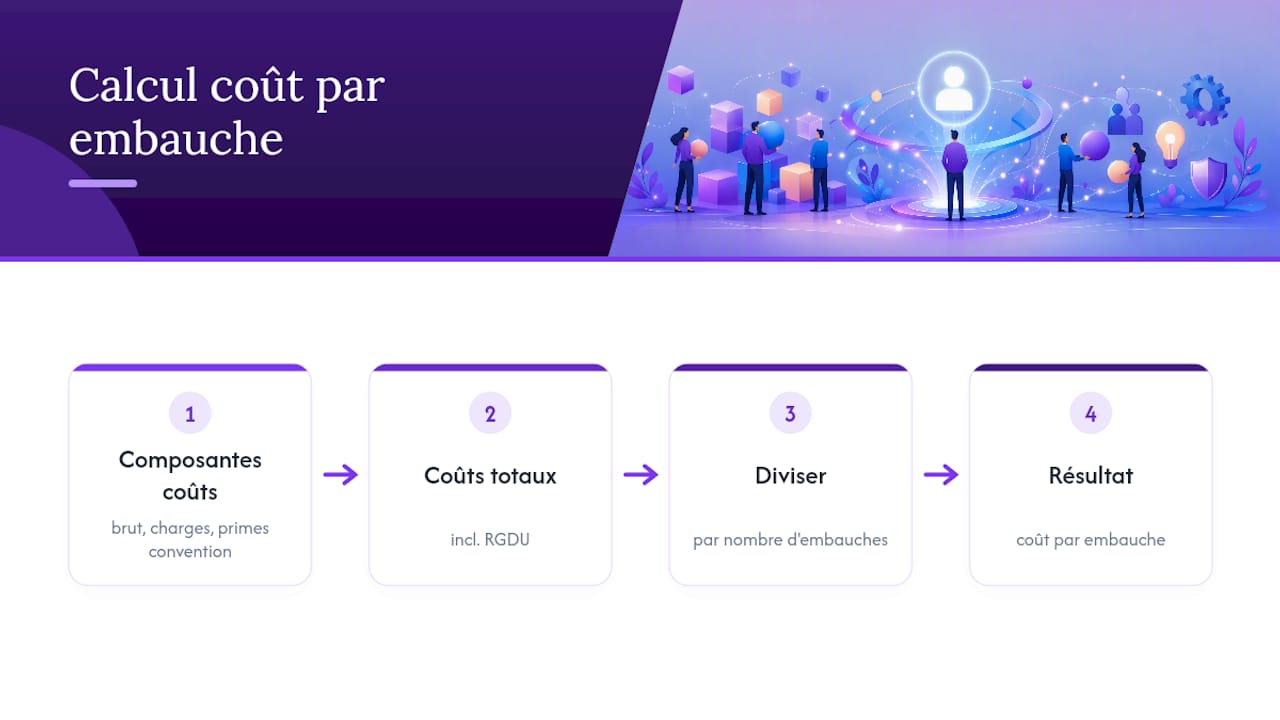
The applicable collective agreement also weighs in, with its bonuses, its minimum wages and sometimes specific industry contributions that you need to identify beforehand.
Which costs should you include in your calculation?
A reliable recruitment budget adds up three families of expenses, which are often underestimated as a whole.
Internal costs:
- Time spent by the HR team screening applications and running interviews
- Time of the operational managers taken up by technical interviews
- The subscription to an ATS or an applicant tracking tool
- The logistics costs of organizing interviews
External costs:
- Job ads on job boards and professional networks
- Recruitment agency fees, often billed as a percentage of the annual salary
- Personality or aptitude tests
- Travel expenses for invited candidates
Indirect costs, the ones most often forgotten:
- Lost revenue from the vacant position, while activity slows down or rests on other employees
- The drop in productivity during the new hire's first weeks of onboarding
- IT hardware, software licenses and equipment provided on arrival
- Time devoted to training and mentoring
Pro tip: Value each internal hour in euros per hour based on the fully loaded salary of the person involved, then add a margin of 10 to 15% for contingencies such as incidental expenses or delays that drag on.
How much does a hire really cost? Two costed scenarios

Take a junior role at €28,000 gross per year, recruited in-house without an agency. HR time (about 15 hours at €35 per loaded hour) and manager time (8 hours at €45) already add up to €885. Add a paid job ad at €300, a personality test at €60 and hardware for onboarding at €400. Direct total: about €1,645. If this role qualifies for the RGDU because it is close to the SMIC, employer contributions drop noticeably, which lowers the overall employer cost over the year, independently of the recruitment cost itself.
Second scenario: an experienced role at €45,000 gross, handed to an agency charging 20% of the annual salary, or €9,000 in fees. Add three weeks of vacancy estimated at €2,500 in lost productivity, and two weeks of supported onboarding at €1,200. The total exceeds €12,700, well above the national average.
An employee costs about 1.4 times their gross salary at the full rate, excluding exemptions and incidental costs, according to the industry's private simulators. This ratio works as a quick benchmark, but it climbs fast as soon as a hire fails early: the real cost can then be multiplied by 3 to 5, which is why you should weight your estimate by a realistic failure rate rather than rely on a theoretical average cost.
Why does cost per hire vary so much from one role to another?
A rare role in a talent-short sector is structurally more expensive to fill: the skills shortage stretches the time to hire, and every extra week of vacancy adds to the bill. The average recruitment in France generally takes four to eight weeks depending on seniority, longer for management roles.
The choice of sourcing method also weighs heavily: an in-house hire rarely costs more than a few hundred euros excluding salaries, while an external agency often charges 15 to 25% of the annual gross salary according to the best management software. Specific contributions (mandatory provident insurance, the APEC contribution for managers) and the minimums set by the collective agreement complete the picture.
How to lower cost per hire for good
Managing this cost means tracking a few indicators continuously rather than calculating it once a year:
- Cost per hire itself, recalculated quarterly by type of role.
- Time to hire (average time between opening the role and signing), which directly drives the cost of the vacancy.
- The early failure rate (departure or termination during the probation period within the first six months).
- The cost of the vacancy, expressed as lost revenue or lost productivity per week.
In practice, three levers bring the bill down without sacrificing quality: automating sourcing to limit the HR time spent looking for profiles, setting up an employee referral program that reduces reliance on paid ads, and maintaining a pool of already qualified candidates to shorten the time to hire. Cutting time to hire by a few days is often enough to significantly limit the cost of the vacancy on high-value roles.
Pro tip: Always budget a weighted cost rather than a raw average. Multiply your estimated cost per hire by the failure probability of the role in question: that gives you a realistic budget reserve rather than an optimistic figure that blows up at the first early departure.
Which tools can you use to estimate your recruitment cost?
The official service-public simulator calculates the salary cost including employer contributions and applicable relief schemes, a good starting point for the legal baseline. Complementary tools refine the estimate:
- Simulators from firms such as Archipel, which detail the impact of meal vouchers, health insurance and AT/MP (workplace accident and occupational disease) contributions on the total cost.
- APEC guides for management roles and their specific contributions.
- Payroll solutions such as Payfit to project the monthly employer cost.
These simulators rarely cover your internal sourcing costs. An AI-driven talent search platform fills that gap by reducing the time spent identifying qualified profiles.
What I learned from watching poorly calibrated recruitment budgets
Most companies calculate their cost per hire once, then forget about it. That is a mistake: this figure moves with every strategic hire and every hard-to-fill role. Invest in optimizing it as soon as your hiring volume goes past about ten a year, or as soon as a critical role takes too long to fill. The balance between hiring quality and cost control is managed with indicators tracked over time, never with a frozen estimate. And always budget a margin for uncertainty: it always ends up materializing.
Jules
Lower your sourcing cost with Kalent
A good share of cost per hire comes from the time spent searching for, qualifying and contacting candidates, often compounded by fees paid to external agencies when in-house sourcing stalls. Kalent tackles this expense head-on: its database of more than 200 million profiles in Europe and the United States, enriched with 80% mobile numbers and 60% personal emails, lets you reach the right candidates without piling up paid job ads.
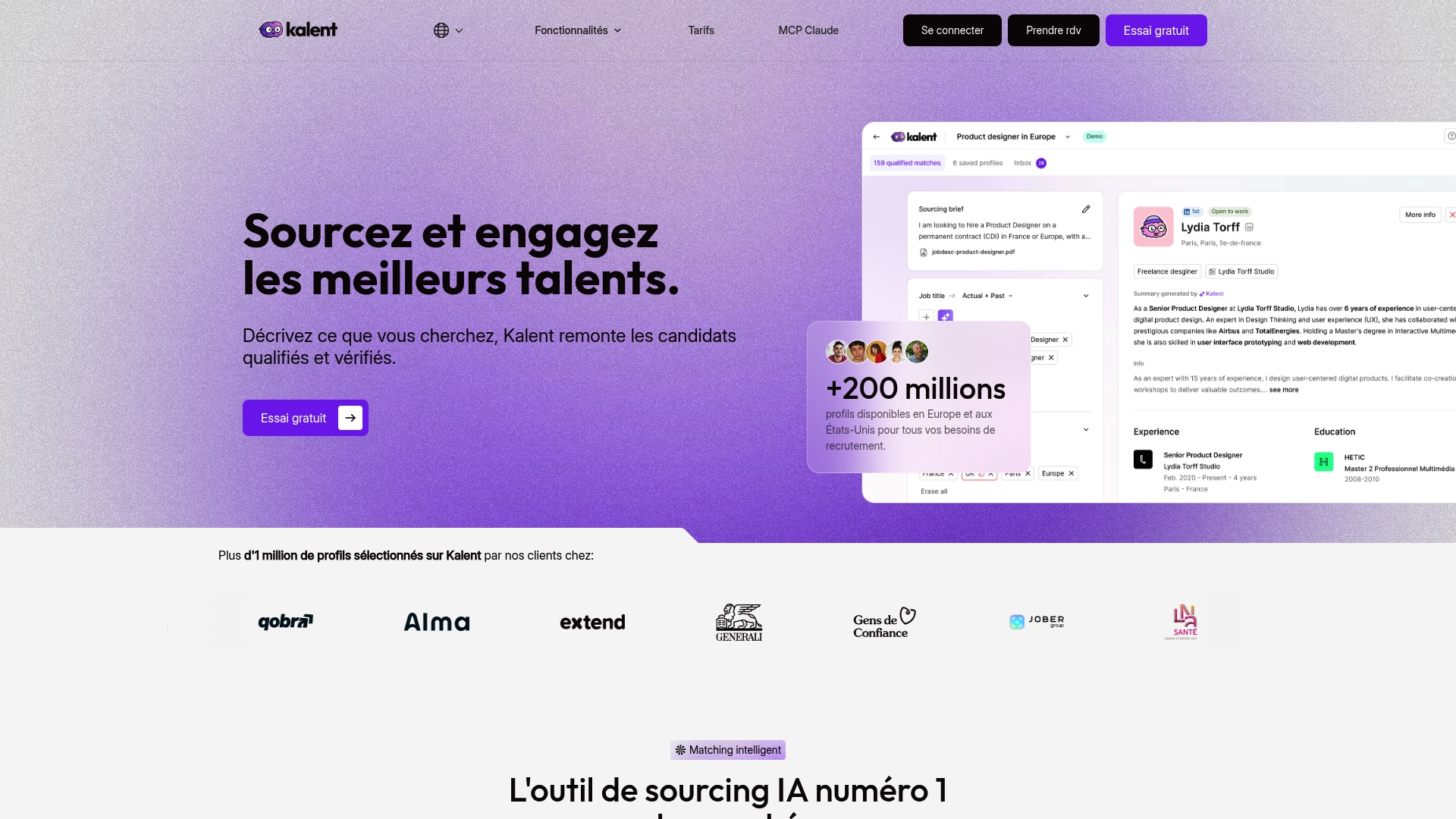
Automated outreach via LinkedIn, email and WhatsApp cuts sourcing time in half, which reduces the cost of the vacancy and the occasional use of an external agency accordingly. The Sourcing plan starts at €79 per month, or €1,490 per year with an annual commitment. To assess the concrete impact on your recruitment budget, book a demo.
Sources
Find the public service hiring cost simulator, details on the RGDU and the Archipel comparison.
Frequently asked questions
What is the total employer cost of an employee earning €2,000 net?
This amount excludes the recruitment cost itself, which is added separately.
What is the total employer cost for an employee earning €1,600 net?
The official simulator refines this calculation based on your sector and headcount.
What is the formula for calculating cost per hire?
The reference formula is: total recruitment costs (internal, external, indirect) divided by the number of hires made over the period. It must include HR time, external fees such as agencies, and the cost of the vacancy.
How does Kalent help reduce this cost?
Kalent automates sourcing and multichannel outreach, which cuts the time spent identifying qualified candidates in half. Less HR time taken up and less reliance on paid job ads translate directly into a lower cost per hire.
Is the average cost of a hire the same for every role?
In France, the estimate often falls between €5,000 and €8,000, but a hard-to-fill role that calls on an agency frequently goes beyond that threshold.


